

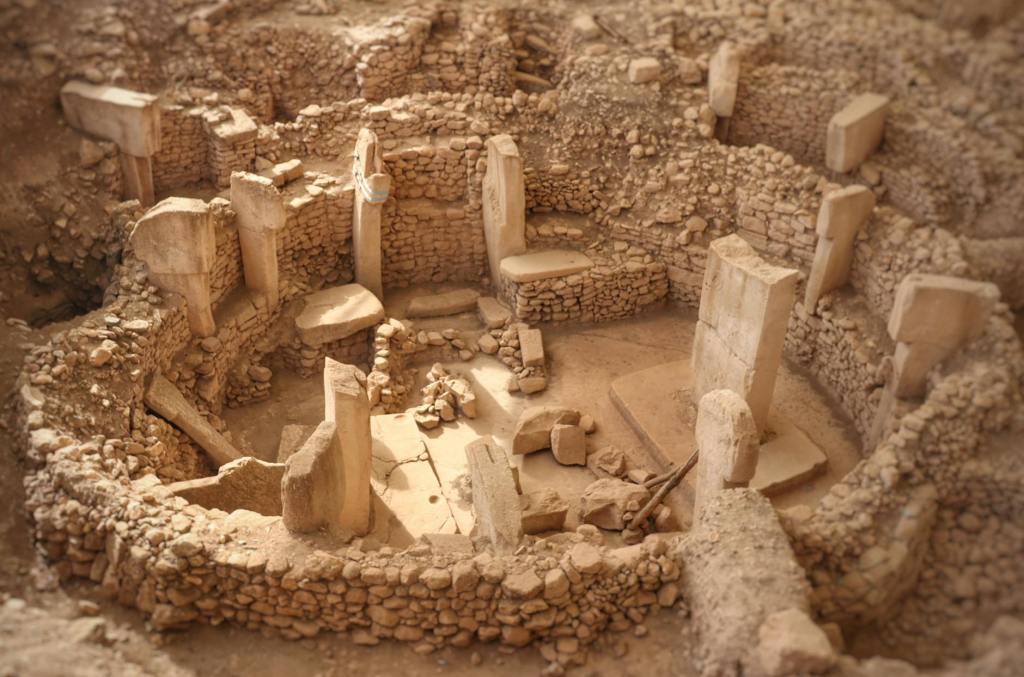
In November, I briefly discussed the Fey of the Feengrenze for the Roleplaying the Fey megaguide, noting their nearly human behavior. I did not elaborate, and calling them “nearly human” is a vague summary of one of Feengrenze’s greatest tragedies. Let’s clarify that. The downfall of the fey is complex—so complex that I split it into several posts. Fortunately, I have Archeologist Cinnibara Von Kupferthal’s notes to help explain.
From the Notebooks of Cinnibara von Kupferthal
Highsun 8th 501NMR
I have been asked to contribute to a volume on Faerie folk with other members of the Natural Philosophy Club in Sliberberg. My mother’s and my observations of highland enclaves from summer 470 NMR will be central to the work.
I have also been asked, due to my studies of Domhannua’s ruins, to write the chapter on the history of the fey.
An initial draft of A very brief history of the Fey of Domhannua
The fey arrived on Domhannua about 4.5 million years ago (the exact calendar is uncertain; I must consult Aoibheann).
They were a rather… mixed bunch.
A migration of high and low—nobles, rogues, and all those in between.
Some were former courtiers to the High King and Queen, seeking to serve the Summer Princess-turned “goddess” in her lonely vigil as warden of her father’s prison.
Many were spare heirs and scions of various sidhe houses, unwilling to be ruled by two girls only 5 fey years old (I shudder to think what might happen if my daughters, Princess Whimsy or Marigold, or my sisters were given such power) and their retainers. These young nobles shared the common faults of youth: foolishness, recklessness, and a belief in their own rightness and divine entitlement to become high fey.
Most were the unwitting “common folk” (I cannot think of any other term to use here, but “common” is surely inadequate) who were fast-talked, bribed, or otherwise convinced into becoming the ruled for the former group, mostly goblinoids, lesser fairies. centaurs, satyrs, and formorians.
Regardless of why they came, they found Domhannua, then called Bronntanas-Niamh. The names are somewhat ironic in light of what her majesty told me recently. It was a perfectly verdant world, primal and untouched by man and fey alike. They set about building a new Faerie. It was hard work, according to the few surviving testimonies of this first age of Domhannua. The world was poor in magic. Fey must have been beside themselves to be forced to lower themselves to the hard work of digging burghs and all other matters of construction.
They quickly discovered something far more troubling. The absence of ambient faerie magic rendered them mortal. Many fey, including many sidhe, lost their lives to the dangerous stunts the fey of Faerie use for entertainment. Others died from mundane accidents, illnesses, or sudden and murderous shifts in the emotions of their fellows.
After discovering they could be killed, many fey retreated up the faerie road into Faerie. However, most chose to remain and, albeit stubbornly, made the best of their new reality. Within a generation (Note to self: ask Aoibheann how long a Faerie generation is), the fey had established numerous kingdoms across Domhannua.
The second age of Domhannua began approximately 2.5 million years ago, or by my best estimate, three generations after the initial settlement. Without warning or explanation, Faerie magic began to radiate from the ground throughout the continents. The fey celebrated the abrupt resurgence of Faerie forests and the return of magic after generations of absence. Kingdoms near these new sources of magic gained great wealth through Faerie Fruit and magical devices.
However, the uneven distribution of wealth breeds envy. Envy leads to resentment, resentment leads to anger, and the anger of kings and princes breeds only one thing: war. The High Fey noticed that each generation since settlement was aging faster and living shorter lives. Fearing for their youth and immortality, the realms not benefiting directly from the magic did something unthinkable to the fey of Faerie. They went to war.
What followed has become mythologized, making many sources unreliable. According to my only trustworthy account, the Fairy Godmother, the wars continued for a generation, estimated to be around 250,000 years. Territories with magic shifted control frequently. Millions of fey perished through conflict and magical devastation.
Ultimately, it was all for naught. The High Fey, in their ignorance, failed to grasp what the return of magic meant. Faolan’s prison leaked insanity-tinged power, warping or dissolving everything it touched into reality soup. The fey’s spells, artifacts, and workings might have cracked the crust, letting Wyrd magic flow.
The second age ended dramatically and ironically in the year of its largest battles. Vast areas of the world were suddenly wyrdified, destroying entire kingdoms and armies. Nearly all high fey died instantly, and most Sidhe nobility never returned. So many people had gathered near the magical areas that this devastation almost wiped out the fey. Only those in the towns and settlements at the edge of the realms survived.
During this time, the Summer Princess disappeared from the historical record, presumed killed by the disaster (Aoibheann claims that the Fairy Godmother is the Summer Princess. Need to corroborate that).
The start of the third age brought upheaval. Survivors of inland collapses fled to the coasts, chased by unstable reality. Rulers of large settlements, swollen by refugees, quarreled over who would lead next.
I witnessed the destruction and abandonment of towns and cities, fruitless wars, and wanton death. Eventually, by my estimate, only about a million fey remained on Domhannau, their numbers thinned from war, illness, and misfortune.
After these losses, the millennia that followed are less well documented. The succession wars had eliminated most of what remained of the upper social strata. With leadership diminished, peasant farmers were left to inhabit small villages scattered across the landscape. Conditioned by generations of societal superiors into small-mindedness, these humble agrarians simply shrugged and continued farming. To this day, they still live in remote villages, maintaining their way of life as they have for eons.
Amidst these enduring rural traditions, ambitious fey continued to try to recreate the empire of old, seeing themselves as high and mighty. However, such attempts rarely succeeded, usually ending as ruins or as petty kingdoms in scraps of Faerie forest or mountain valleys. Over centuries, these efforts became fewer and more spaced out. Ultimately, only three realms achieved prosperity: New Mountainheart, Qualdria, and the Hexmires.
Over time, I have observed that the fey age faster and live shorter lives, which has affected their culture. In response, they developed a cargo cult religion, rewriting their history into mythological narratives and creating a polytheistic pantheon from misunderstood stories of Domhannau’s golden age. During the third age, increased contact with mortals led the fey to adopt technologies as needed. (Should I mention here that I have witnessed fey handling iron and steel in my travels?)
My mother, Jaspera, believes that soon the differences between fey and mortals will be minor. Based on my adventures, I agree.


Leave a Reply