

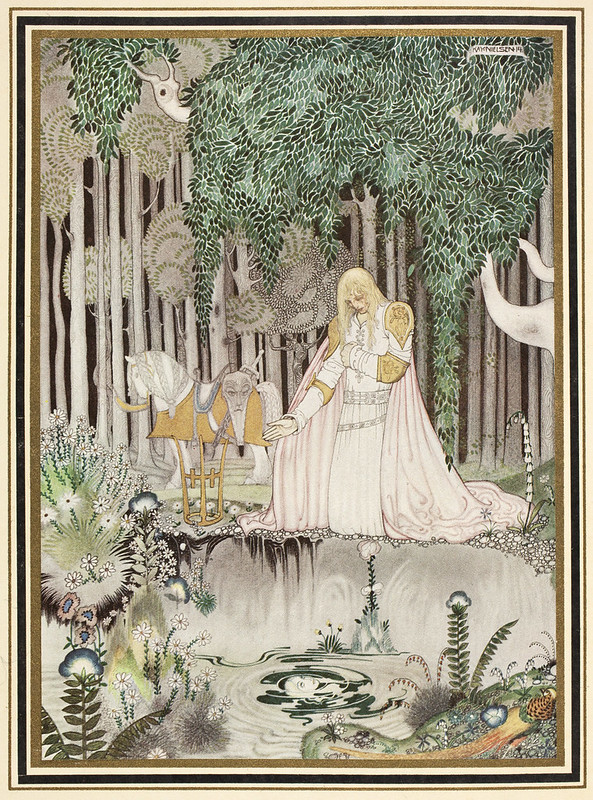
Cover image from East of the Sun and West of the Moon illustrated by Kay Nielsen (source Public Domain Image Archive)
An encounter with knights of the Fey Courts
Jannik Glockenton sat in his carriage, a stream of curses and expletives dribbling down his fat lips. He had every right to be frustrated; the carriage had not moved in over 20 minutes, and he was expected in Sliberberg by 5:00 for an important banquet at the New Mountainheartian Merchants Guild guildhall. When asked why they were not moving, his coachman simply responded that there was a line of a dozen carriages and wagons between them and the bridge, stopped on the road in front of him, and a large group of people standing about the bridge staring in the direction the road continued in. He looked at his heavy gold pocket watch; it was 3:30, and he had at least another hour’s worth of travel between him and his destination.
He finally could no longer stand it and threw open the door with such force that it startled the footman. He then started trudging the road, slowing only to give his guards time to catch up.
It took him 2 minutes to carry his portly frame to the head of the line of traffic, where the crowd had gathered at one end of the narrow stone bridge that spanned the small river. Noises that could have been the clash of wood on wood and steel on wood emanated from beyond. Strangely, nobody in this crowd of the lowly born seemed to pay him any mind, a wealthy man accompanied by armed men; nobody turned to see who approached, nobody parted ways for him.
He was not in the mood for any of this. He pointed to his guard, shouted, “You clear me a path,” and then pointed to the crowd. Wordlessly, they shoved the gawkers aside to let him pass through to the foot of the bridge, where the reason for the stoppage was apparent.
On the bridge, there was a pair of figures fighting. One was tall and wore plate armor shining like polished silver, with a magnificent crested helm, and a billowing crimson cap. Despite the apparent weight of the armor, he moved with superhuman grace and agility. Every strike of his longsword and parry of his shield was a work of art. His opponent was short and nimble. He wore hide armor and a helmet made from a stag’s skull, complete with antlers. He deftly blocked the knight’s blows with a simple shield of wood and hide before striking confidently with a large, crude bludgeon.
Jannik could admit that the display was dazzling, but he had places to be and people to impress. “Don’t just stand there,” he said to his guards, “DO something, clear the bridge.”
At the moment, a man in simple brown clothes and a wide-brimmed hat, a farmer Jannik suspected, jumped in front of the guards to block them, shouting, “You fool, if you send these men onto the bridge, they will die, do you not see that they are knights of the courts of fairie?” As if to punctuate the man’s warning, the air shimmered, and a loud woosh was heard; the tall knight was wrapped with brambles and vines, while the short one was engulfed in burning moonlight. “They have been fighting every day on this bridge,” continued the farmer, “Both are evenly matched in skill, strength, and stamina. Neither can accept a draw, so they fight on this bridge until they grow too weary.”
“Why do they fight?” asked Jannik, his interest piqued.
“Why do any fey do the things they do?” said the farmer, “Maybe the twin queens of fairie ordered them to do so.”
There was a mighty roar as the two knights clashed in one last, do-or-die exchange that lasted several seconds before they staggered backwards into the waiting hands of attendants. Both were visibly panting now. After a few moments, both knights returned to their feet and removed their helmets, revealing a handsome elf and a disgusting goblin beneath the helmets.
“It seems that I no longer have the strength to fight Sir Pilb,” said the elf in shining armor.
“As do I, Sir Reyzorwyn,” said Sir Pilb, his stag-headed helm in the crook of his arm.
The two knights bowed to each other.
“We will settle the matter tomorrow, at this place, at the third hour of the afternoon,” said Sir Reyzorwyn.
“Indeed,” said Sir Pilb.
That single exchange seemingly sealed a temporary truce, and both returned to their sides of the bridge. Their attendants helped them onto their mounts—a griffon for Sir Reyzorwyn and a worg for Sir Pilb—before the two rode in opposite directions.
The crowd dispersed after that, except for Jannik, who just stood there, unable to process what they saw. How could two men who had just spent what could have been an hour fighting each other simply conclude their fight with respectful bows and a promise to return at the same time tomorrow? He stood in reverie until one of his guards poked him, which seemed to return him to his senses. He shook his head. The ways of the fey are mysterious, after all.
Encounters like Jannik are not uncommon. Knights of the Faerie are by far the most common visitors to the Feengrenze from the Manyfold, and the players are liable to stumble across or more likely into errant Knights of the Faerie on their adventures. To help you use them in your game, here is what you need to know, starting with a short primer on the courts of Faerie.
The courts of Faerie
Faerie is the realm of life, creation, and change. Like all the metauniverses, it is a mirror to the mundane universes that amplifies everything in line with its defining force or forces. As such, in Faerie, everything is larger than life; mountains are miles high and topped with immaculate glaciers, forests are filled with towering ancient trees that seem to ooze wisdom (and usually do), and every lake and pond is a perfectly reflective mirror blue. Likewise, the high courts of the twin queens of the fey, Titania’s Spring Court and Mab’s Autumn Court, amplify the idea of a royal court in ways that make any mortal Court, even shining Camelot, seem like a pale imitation.
When their mother, Niamh, died imprisoning their father, Faloan the Mad, the fey and prime aspect of Faerie who embodies becomings and change, Titania and Mab each inherited one aspect of their mother’s nature as the prime aspect of life within the Manyfold (my version of the multiverse), and their courts reflect this.
- Titania inherited life as form and continuity. Everything in her domain is shaped into stories and beauty, and her court closely mirrors the courts of the mortal worlds, but exaggerated, as if it were a creation of a romantic bard. Her courtiers are among the most beautiful creatures in the multiverse, all love is courtly love, every promise is an oath, and every ball seemingly lasts forever.
- Mab’s inherited life as impulse and renewal. Her twilight realm is a deep primordial forest that serves as her palace. She holds court outside with brute beasts, huntsmen, and others that might be called uncivilized and primal. She presides over hunts, orgies, and gluttonous feasts of lightly roasted game of the fields and fruit of the trees by light of the bonfire.
However, both Queens and their vassals have one thing in common: each has a host of knights at their disposal, consisting of members of all the fey species that call their domain home
The Knights of Faerie
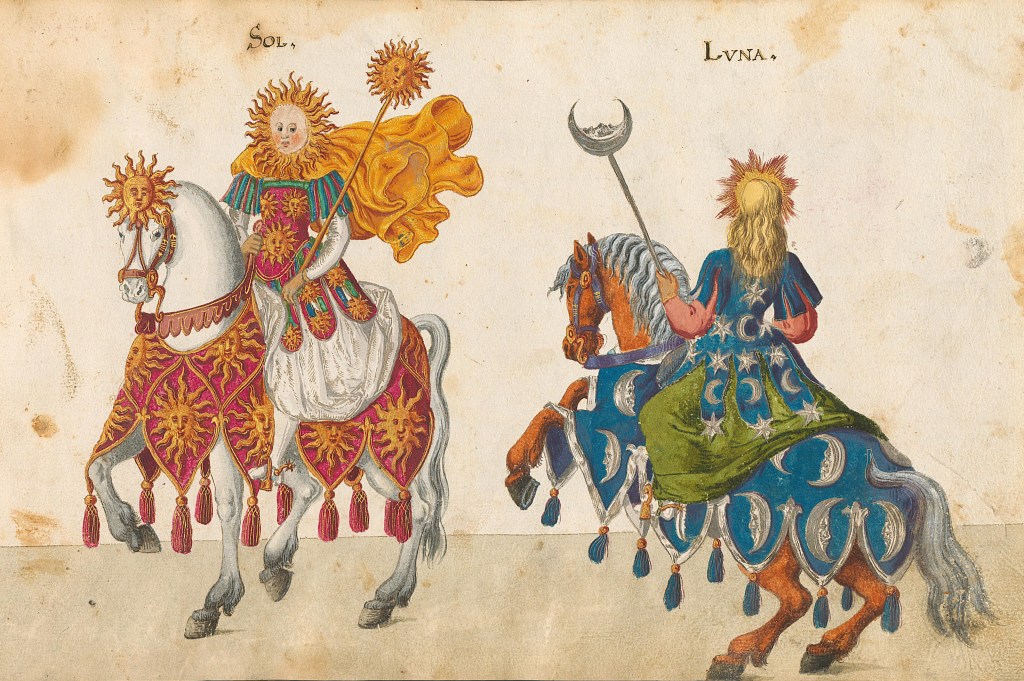
The Knights of Faerie are more than normal fey; they are empowered by their pledges of service to the Seelie or Unseelie court. They stride through glade and glen as subjects of awe and deference among the fey folk.
Their roles
The role of a Knight of Faerie in a fey court depends mainly on which faction of fey they belong to. Titania loves inventing new titles and responsibilities to bestow upon her followers; it is a perfect excuse to have a ceremony. Some recently created examples include the Keeper of the Seal (who cares for her pet seal), the Keeper of the Cellars (responsible for procuring wine and spirits for the royal cellars) and the Royal Cushion Bearer (who follows Titania around with a pillow in case she faints. The bearer of the title, Sir Lachlan, is her current favorite and if rumors are to be believed her current lover).
In the unseelie court, the knights serve as Mab and her vassal’s huntsmen, accompanying her and her vassals on her frequent hunting expeditions. The knights of Mab’s court are among the greatest fighters in Faerie, for Mab has unusual taste in quarry (she once hunted a 5-star general of the Infernal Reich and his entire army across no less than 20 universes of the Manyfold, while also hunting the concept of death itself at the same time). Those who win her favor become members of the wild hunt and travel across the Manyfold, looking for worthy prey for the court’s hunts.
However, both courts shared the tendency for the queens and their vassals to send their knights on quests and errands. One can often encounter these knights errant as far away as the Feengrenze on errands for their queens. Interestingly, there is a tendency for knights of opposing courts to meet on their quests, which, by the ancient code of the Knights of Faerie, means that the two must duel until one yields. This is so common that it makes one wonder if the primary reason for the queen to send knights on quests is so that they can be forced to duel for their entertainment, as much as for whatever sparkly trinket or rare delicacy the knight was tasked with retrieving. That implies a level of coordination between the queens, which, given their natures, is possible, but is very likely unlikely.
The Code of Eight
All Knight of Faerie regardless of which court they serve follow a strict code of honor and etiquette at all times. The Code of Eight consists of 8 simple rules established by both queens when they were 8 years old.
- Thou art to fulfill any quest given to you by thy liege, whether big or small.
- If thou encounter a knight from the opposing court, thou shall duel until one yields.
- Thou art not to kill another knight or any lord or lady of either court, no matter if they deserveth death or not.
- Thou art expected to uphold the tenets of the queen thou serves, under any circumstance.
- Thou shalt not dishonor thy leige by word or deed.
- Thou shalt not spill the blood of an innocent creature or plant, under any circumstance.
- Thou shalt not utter falsehood.
- Turn not thy back upon a worthy foe.
The Entourage
It is rare to encounter a Knight of Faerie alone; they usually travel with an entourage. Usually, this entourage will be made up of 1d4 squires, 1d6 centaur troopers, or centaur men-at-arms serving as men-at-arms, 1d20 commoners or other similarly low CR fey serving as attendants, guides, porters, and scouts, with their position in the procession denoting their importance. Typically, the procession will let their liege lead the way and treading boldly in his wake, which, given the tendency for knights of the Faerie to casually ignore the laws of physics, may include up sheer vertical surfaces, across bodies of water, or straight through walls.
Sometimes, a knight is accompanied by a satyr serving as a bard, a pixie druid, or other specialists and casters, and they have a place. Fey knights will usually stop for no man or obstacle on their quest, even if it involves casually ignoring the laws of physics. These will usually have a place of honor among the knight’s entourage and will accompany the knight at the fore of the procession with the squires and men-at-arms, all the better to advise them.
Sometimes, groups of knights will ride out on the same quest. In such circumstances, the most senior knight or the knight with the greatest titles/achievements will serve as the leader, riding at the fore, with the lesser knights following behind, their train of retainers intermingled.
Becoming a knight
Any creature of Faerie and even mortals can pledge themselves to the Seelie or Unseelie court as a knight. Usually, this starts a period of apprenticeship to a more experienced knight as a squire. There is almost no exception to this rule, and it is typical in the rare cases when a human knight or paladin swears themselves to one of the courts for their new liege to youthen the aspirant to their teens to clarify their relationship to the court. Typically, a squire will spend about 6 to 10 Faerie years (which may or may not be more or less than a similar amount of time in the mortal realms) learning the craft of knighthood, including swordplay, magic, questing skills, and the norms and rules of the court. Typically, when the squire’s knight or liege figures them ready, the prospective knight will be granted a set of trials and quests to prove that they are a knight. The initiation of the knight of the Faerie has plenty of variations, but the following pattern is among the more typical set of trials.
- Acquire a mount. The mount must be a creature that is hard to tame or track, such as a griffon, a hippogriff, a Pegasus, a worg, or a unicorn.
- Acquire and/or create a weapon worthy of a knight, usually made of rare or legendary material.
- Achieve a deed worthy of a knight of Faerie and then present a trophy of your achievement to your queen. The nature of the quest depends on the queen, but typically it involves slaying a powerful monster and or saving a maiden (often both). There is no evidence to suggest that the maiden the aspirant saves is usually one of the queens, or that the queens take the subject’s virginity as part of the testing process.
Under extraordinary circumstances, such as when that aspirant is a notable (level 12 or above) hero, an aspirant will be granted full knighthood immediately.
The Black Knight
One Knight of Faerie stands above the rest in terms of raw power and legend. The black knight rides through the glens and glades, bedecked in antiquated black chain mail and wielding a black battle-ax, astride an ancient and massive black unicorn, as quiet as a shadow, never saying a word on some mysterious quest. He is a member of neither court, nor the queens know his identity, although they are sure they would recognize him if he were to remove his great helm.
His quest is unknown, but he travels far afield into the worlds of man, seemingly searching for something. He frequently stops parties of high-level adventurers, blocking their path until they fight him, summoning a spectral entourage of men-at-arms and mages to support him. Strangely, never kills, whether his opponents be worthy or unworthy of death; he never deals the final blow. If any of the characters are slain, he restores them to life and wordlessly travels onward. This tendency to fight heroes of many worlds has caused many scholars to believe he is seeking someone with the strength to fulfill some even greater quest than the knight himself is tasked with.
Adventure seeds
- The Black Knight’s Challenge: The Black Knight blocks the players’ path — whether through a dungeon corridor, a mountain pass, or a swamp trail. Through silence and body language, he makes it clear: there will be no passage forward or back until the players face him in battle. Should they force him to yield, each player receives a legendary boon.
- The Lost Squire: The players find a disoriented fey squire wandering the woods, separated from his master’s entourage. He recalls their last stop — a nearby town still reeling from the chaos of an all-night revel thrown by 25 fey — and knows his knight is on a quest to slay a dragon that stole from his queen. The squire begs the players’ help in reuniting with his master.
- The Fey Tournament: Through strange twists of fate, the players are entered into a tournament held by a Fey lord. The events are bizarre and otherworldly — odd contests and duels against colorful knights. Success may bring great favor, while failure could mean eternal mockery.
- The Pursued Refugee: The players meet a seemingly harmless being fleeing from a band of Unseelie knights. The being claims not to know (or refuses to say) why they are hunted. The knights and their entourages will overwhelm the party if confronted directly; the players must resolve the matter through guile, allies, or bargaining.
- The Rival Quest: In the wilds, the players meet a fey knight and entourage on a quest. The knight is either chasing the same quarry as the players or hunting something close by. He offers to join forces, but alliance with the Fey is never without risk.
- The Race for the MacGuffin: The players learn that a fey knight and his entourage seek the same treasure, relic, or secret. The race is on — and should the players fail to claim it first, they may face the knight in a deadly duel for the prize.
Stat blocks
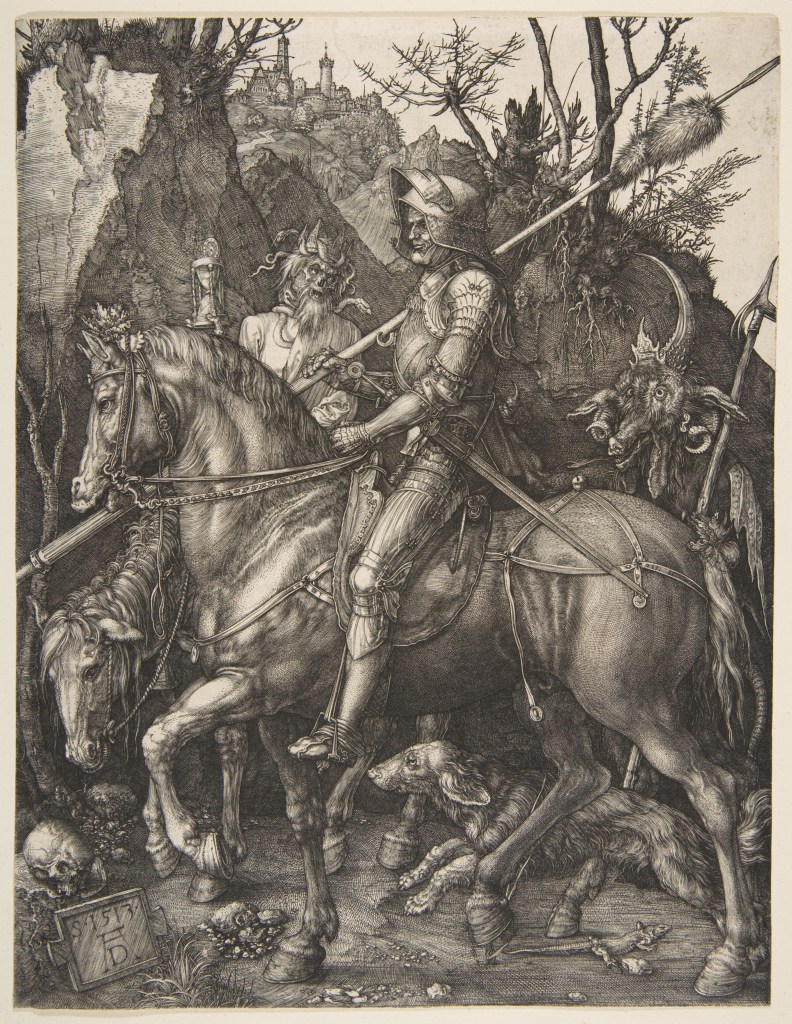
These stat blocks are designed to let you drop fey knights into your game at any tier. Use them as duelists, quest-givers, rivals, or mysterious interruptions to mortal affairs. Each is flavored by its allegiance to Titania’s Seelie court or Mab’s Unseelie court but can be reflavored freely.
Centaur Man At Arms
Apprentice knights and Freemen warriors who serve as loyal Retainers
Medium fey, chaotic neutral
- Armor Class 17 (half plate)
- Hit Points 66 (12d8 + 12)
- Speed 30 ft.
| STR | DEX | CON | INT | WIS | CHA |
| 14 (+2) | 14 (+2) | 12 (+1) | 10 (+0) | 10 (+0) | 12 (+1) |
- Senses passive Perception 10
- Languages Common
- Challenge 3 (700 XP)
Innate Spellcasting. The centuar courser’s innate spellcasting ability is Charisma (spell save DC 11, +3 to hit with spell attacks). It can innately cast the following spells, requiring no material components:
1/day: heroism
Actions
Greatsword. Melee Weapon Attack: +4 to hit, reach 5 ft., one target. Hit: 9 (2d6 + 2) slashing damage.
Longbow. Ranged Weapon Attack: +4 to hit, range 150/600 ft., one target. Hit: 6 (1d8 + 2) piercing damage.
Trampling Charge. (Recharge 5–6). The centaur moves up to its Speed without provoking Opportunity Attacks and can move through the spaces of Medium or smaller creatures. Each creature whose space the centaur enters is targeted once by the following effect. Strength Saving Throw: DC 14. Failure: 7 (1d6 + 4) Bludgeoning damage, and the target has the Prone condition.
Multiattack. The centaur makes two attacks, using Greatsword or Longbow in any combination.
Fey Squire
An apprentice knight, usually youthful, is always in over their heads in a fight
Medium fey, chaotic neutral
- Armor Class 13 (studded leather)
- Hit Points 27 (5d8 + 5)
- Speed 30 ft.
| STR | DEX | CON | INT | WIS | CHA |
| 14 (+2) | 12 (+1) | 12 (+1) | 10 (+0) | 12 (+1) | 12 (+1) |
- Senses passive Perception 11
- Languages Common, Darkvision 30
- Challenge 1/2 (100 XP)
Innate Spellcasting. The fey squire’s innate spellcasting ability is Charisma (spell save DC 11, +3 to hit with spell attacks). It can innately cast the following spells, requiring no material components:
1/day: cure wounds, shield of faith (Seelie) or bane (Unseelie)
Actions
Longsword +1. Melee Weapon Attack: +5 to hit, reach 5 ft., one target. Hit: 6 (1d8 + 3) slashing damage.
Longbow +1. Ranged Weapon Attack: +4 to hit, range 150/600 ft., one target. Hit: 5 (1d8 + 2) piercing damage.
Knight of the Seelie Court
Bedecked in shining armor and full of righteous indignation
Medium fey, chaotic neutral
- Armor Class 19 (plate, shield)
- Hit Points 71 (11d8 + 22)
- Speed 30 ft.
| STR | DEX | CON | INT | WIS | CHA |
| 16 (+3) | 12 (+1) | 14 (+2) | 10 (+0) | 12 (+1) | 15 (+2) |
- Senses darkvision 60ft, passive Perception 11
- Languages: Elvish, Sylvan
- Challenge 4 (1100 XP)
Innate Spellcasting. The knight of the seelie court’s innate spellcasting ability is Charisma (spell save DC 12, +4 to hit with spell attacks). It can innately cast the following spells, requiring no material components:
2/day: misty step, moonbeam, aid
Actions
Longsword. Melee Weapon Attack: +5 to hit, reach 5 ft., one target. Hit: 7 (1d8 + 3) slashing damage plus 7 (3d4) slashing damage and the creature has disadvantage on its next attack roll.
Longbow. Ranged Weapon Attack: +3 to hit, range 150/600 ft., one target. Hit: 5 (1d8 + 1) piercing damage plus 10 (4d4) psychic damage.
Multiattack. The Knight of the Seelie Court makes two attacks, using Longsword +1 or Longbow +1 in any combination, or if mounted, one lance +1 attack and Longsword +1 or Longbow +1
Lance. Melee Weapon Attack: Mounted only +5 to hit, reach 10 ft., one target. Hit: 7 (1d8 + 4) piercing damage and the creature is pushed 10 feet away.
Cavalry. Bonus action. Knight of the Seelie Court orders its mount to move up to its speed and take an action. That action can be the Dash or Disengage action, or any action printed on the mount’s statblock. If the Knight of the Seelie Court takes this bonus action the mount does not move or take any actions on its turn.
Reactions
Parry. The knight adds 2 to its AC against one melee attack that would hit it. To do so, the knight must see the attacker and wield a melee weapon.
Knight of the Unseelie Court
Grim brooding huntsmen of the Unseelie court
Medium fey, chaotic neutral
- Armor Class 15 (hide +1, shield)
- Hit Points 71 (11d8 + 22)
- Speed 30 ft.
| STR | DEX | CON | INT | WIS | CHA |
| 16 (+3) | 13 (+1) | 15 (+2) | 10 (+0) | 12 (+1) | 14 (+2) |
- Senses darkvision 60ft, passive Perception 11
- Languages: Elvish, Sylvan
- Challenge 4 (1100 XP)
Innate Spellcasting. The knight of the unseelie court’s innate spellcasting ability is Charisma (spell save DC 12, +4 to hit with spell attacks). It can innately cast the following spells, requiring no material components:
2/day: fear, blindness/deafness, entangle
Actions
Greatclub. Melee Weapon Attack: +5 to hit, reach 5 ft., one target. Hit: 7 (1d8 + 3) bludgeoning damage plus 7 (3d4) thunder damage, and must succeed on a DC 13 Constitution saving throw or be knocked prone
Javelin. Ranged Weapon Attack: +3 to hit, range 30/120 ft., one target. Hit: 4 (1d6 + 1) piercing damage plus 10 (4d4) necrotic damage, and the target’s speed is reduced by 10 feet
Lance. Melee Weapon Attack: Mounted only +5 to hit, reach 10 ft., one target. Hit: 7 (1d8 + 4) piercing damage and the creature is pushed 10 feet away.
Cavalry. Bonus action. The Knight of the Unseelie Court orders its mount to move up to its speed and take an action. That action can be the Dash or Disengage action, or any action printed on the mount’s statblock. If the Knight of the Unseelie Court takes this bonus action the mount does not move or take any actions on its own turn.
Multiattack. The Knight of the Unseelie Court makes two attacks, using Greatclub +1 or Javelin +1 in any combination, or if mounted, one Lance +1 attack and Greatclub +1 or Javelin +1
Reactions
Parry. The Knight of the Unseelie Court adds 2 to its AC against one melee attack that would hit it. To do so, the Knight of the Unseelie Court must see the attacker and be wielding a melee weapon.
Seelie Knight Champion
Titania’s favored champions, exemplars of courtly virtue
Medium fey, chaotic neutral
- Armor Class 18 (plate)
- Hit Points 159 (29d8 + 29)
- Speed 30 ft.
| STR | DEX | CON | INT | WIS | CHA |
| 20 (+5) | 12 (+1) | 13 (+1) | 10 (+0) | 12 (+1) | 20 (+5) |
- Senses passive Perception 11
- Languages Sylvan, Elvish
- Challenge 9 (5000 XP)
Innate Spellcasting. The seelie knight champion’s innate spellcasting ability is Charisma (spell save DC 17, +9 to hit with spell attacks). It can innately cast the following spells, requiring no material components:
At will: aid 3/day: misty step 2/day: aura of vitality, banishing smite, spiritual weapon
Actions
Moonsteel Longsword. Melee Weapon Attack: +9 to hit, reach 5 ft., one target. Hit: 9 (1d8 + 5) slashing damage, or 10 (1d10 + 5) slashing damage if used with two hands to make a melee attack, plus 7 (2d6) psychic damage and the creature has disadvantage on its next attack roll.
Eladrin Longbow. Ranged Weapon Attack: +5 to hit, range 150/600 ft., one target. Hit: 5 (1d8 + 1) piercing damage plus 7 (2d6) psychic damage and the target’s speed is reduced by 10 feet
Cavalry. Bonus action. Seelie Knight Champion orders its mount to move up to its speed and take an action. That action can be the Dash or Disengage action, or any action printed on the mount’s statblock. If the Seelie Knight Champion takes this bonus action the mount does not move or take any actions on its own turn.
Lance. Melee Weapon Attack: Only when mounted +9 to hit, reach 10 ft., one target. Hit: 10 (1d10 + 5) piercing damage plus 7 (2d6) piercing damage.
Multiattack. The Seelie Knight Champion makes three attacks, using Longsword or Longbow in any combination, or if mounted, one lance +attack and two Longsword or Longbow attacks
Reactions
Parry. The knight adds 2 to its AC against one melee attack that would hit it. To do so, the knight must see the attacker and be wielding a melee weapon.
The Black Knight
As quiet as the grave and ineffable as the darkness in a tomb, he rides on a mysterious errand
Medium fey, neutral
- Armor Class 18 (antique chainmail and great helm)
- Hit Points 229 (27d8 + 108)
- Speed 30 ft.
| STR | DEX | CON | INT | WIS | CHA |
| 20 (+5) | 18 (+4) | 18 (+4) | 17 (+3) | 14 (+2) | 14 (+2) |
- Senses passive Perception 12
- Languages Common, Truesight 120
- Challenge 13 (10000 XP)
Innate Spellcasting. The black knight’s innate spellcasting ability is Intelligence (spell save DC 11, +3 to hit with spell attacks). It can innately cast the following spells, requiring no material components:
3/day: wall of thorns, blight, circle of power 1/day: thunderous smite
Black Smite. When the Black Knight hits a creature with his greataxe, he can deal an extra 27 (6d8) necrotic or radiant (his choice) and the creature must succeed on a DC 17 Con save or be blinded until the end of the Black Knight’s next turn.
Oppressive Silence. The Black Knight radiates an oppressive silence in a 30-foot Emanation that originates from him. Enemies of the black knight that start their turn within 30 feet must succeed on a DC 17 Wisdom save or suffer disadvantage on attack rolls against the Black Knight until the start of their next turn. Allies of the Black Knight (if any) are immune.
Actions
Multiattack. The Black Knight makes three attacks, using The Black Greataxe or Longbow in any combination, or if mounted, one lance +attack and two Longsword or Longbow attacks.
The Black Greataxe. Melee Weapon Attack: +9 to hit, reach 5 ft., one target. Hit: 11 (1d12 + 5) slashing damage plus 10 (3d6) slashing damage.
Longbow. Ranged Weapon Attack: +9 to hit, range 150/600 ft., one target. Hit: 8 (1d8 + 4) piercing damage plus 9 (3d8) piercing damage.
Unseelie Knight Champion
Among the Greatest hunters to ever stalk the Manifold and taker of countless quarries
Medium fey, chaotic neutral
- Armor Class 18 (hide)
- Hit Points 209 (22d8 + 110)
- Speed 30 ft.
| STR | DEX | CON | INT | WIS | CHA |
| 20 (+5) | 16 (+3) | 20 (+5) | 10 (+0) | 12 (+1) | 14 (+2) |
- Senses passive Perception 11
- Languages Common, Darkvision
- Challenge 9 (5000 XP)
Innate Spellcasting. The unseelie knight champion’s innate spellcasting ability is Charisma (spell save DC 12 , +2 to hit with spell attacks). It can innately cast the following spells, requiring no material components:
At will: longstrider 3/day: entangle 2/day: fear, blight, greater invisibility
Actions
Culling Stone Greataxe. Melee Weapon Attack: +5 to hit, reach 5 ft., one target. Hit: 11 (1d12 + 5) slashing damage plus 3 (1d6) slashing damage. On a hit, the Unseelie Knight Champion can make an additional attack roll against another creature within 5 feet of the target. On a hit, the second creature takes 11 (1d12 + 5) slashing damage
Blightwood Javelin. Melee or Ranged Weapon Attack: +5 to hit, reach 5 ft. or range 30/120 ft., one target. Hit: 8 (1d6 + 5) piercing damage in melee, or 8 (1d6 + 5) piercing damage at range, plus 7 (2d6) necrotic damage, and the target’s speed is reduced by 10 feet
Cavalry. Bonus action. Unseelie Knight Champion orders its mount to move up to its speed and take an action. That action can be the Dash or Disengage action, or any action printed on the mount’s statblock. If the Unseelie Knight Champion takes this bonus action the mount does not move or take any actions on its own turn.
Lance. Melee Weapon Attack: Only when mounted +9 to hit, reach 10 ft., one target. Hit: 10 (1d10 + 5) piercing damage plus 7 (2d6) piercing damage.
Multiattack. The Unseelie Knight Champion makes three attacks, using Culling Greataxe or Blightwood Javelin in any combination, or if mounted, one lance +attack and two Culling Greataxe or Blightwood Javelin attacks
Reactions
Parry. The Unseelie Knight Champion adds 2 to its AC against one melee attack that would hit it. To do so, the Unseelie Knight Champion must see the attacker and be wielding a melee weapon.


Leave a Reply