

Update: I posted an updated and expanded version of this post with improved formating, a clearer vision for Fey behaviour and lots of new content. Check it out at Roleplaying the Feyfolk Redux
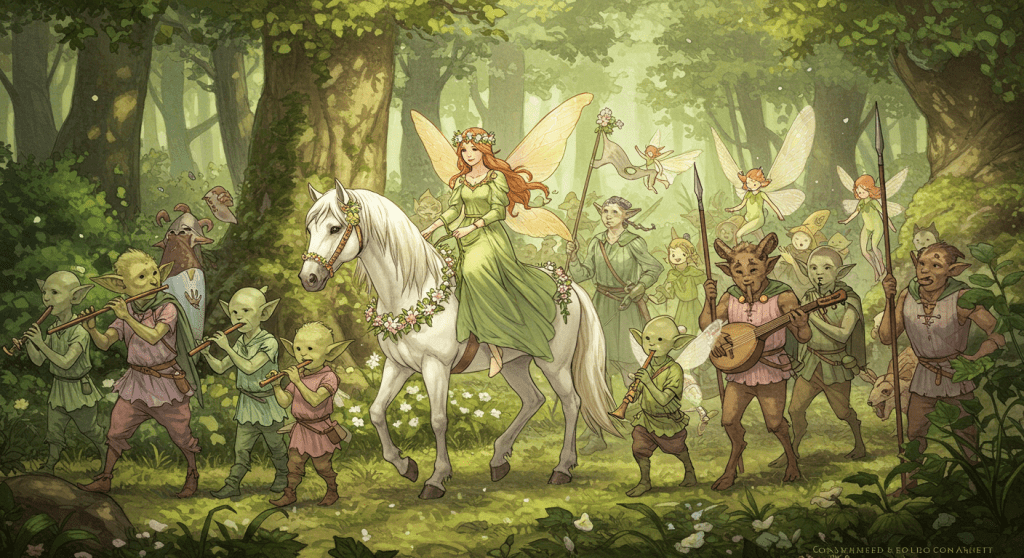
With their tricksy nature, colorful personalities, and alien outlook, no creature type in Dungeons & Dragons makes for more fascinating NPCs than the fey However, they are also one of the hardest creature types for rookie DMs to roleplay convincingly. With fiends and celestials, it is obvious how they will behave, given their alignments. Most people can intuit beast behavior easily, and there have been pages of ink spilled about dragons and giants, but creatures as legendarily sly and mercurial as the fey, not so much. The newest version of the Monster Manual, the 2025 version, exacerbates this problem by drastically reducing monster lore, leaving Dungeon Masters to fill in the gaps. This is especially problematic with the fey because the feyfolk in folklore and fantasy have a very specific way of behaving that often involves dream logic and a very different sense of morality that can be tricky to replicate convincingly without a bit of guidance. I intend to fix this with the first in a series of blog posts that will create a practical and inspiring guide to roleplaying every fey creature in the 2025 monster manual, helping you bring these enchanting and unpredictable beings to life at your gaming table.
Chapter 1 Typical Behaviour Among the Fey
While the feyfolk are varied, some themes are widespread among their behaviors. Here is a brief but by means exhaustive description of these common tendencies among the fey. Keep in mind that some of these elements will manifest in different ways depending on the type of fey
Emotions govern the Feyfolk.
The Feywild is shaped as much by emotion as by nature and magic. Likewise, fey creatures feel their emotion on a much more visceral level than people of other planes. Most common fey have almost no ability to moderate their emotions. Fey folk experience only the most intense variants of any given emotion: joy, rage, and despair; these emotions are as common among the fey as happiness, anger, and sadness are to mortals. The fey are also more likely to show their emotions through actions than mortal folk. When they are happy, many types of fey will dance and sing around the object of their joy. If they are angry, they lash out, they scream curses at the object of their rage, or if the object of their rage is unavailable, they will break things or take their anger out on surrogates. They will shut themselves in and sulk for extended periods if they are sad.
Likewise, the fey are prone to dramatic shifts in emotion. Fey emotions shift dramatically—one moment joyful, the next bored, then suddenly furious. This frequently takes mortals by surprise and fuels the belief among mortals that the fey folk’s capricious nature is more random than it actually is.
On a darker note, the feyfolk’s inclination for intense emotions means they have fragile egos and are easily roused to hate. Feyfolk tend to be easily offended by seemingly innocent things, such as picking a flower from a field, serving a specific dish at a meal, or wearing particular colors on one’s person. Usually, there is a long and convoluted story about why a specific feyfolk does not like a certain thing, but to mortals, it can seem that fey is making a mountain out of a molehill and thus makes them prone to dismissing the fey’s concerns as trivial. This is a mistake because the fey is also well known to hold grudges against those who slighted them for centuries, well after the offender is dead and gone.
This emotional intensity extends to their love lives, making romance among the fey a whirlwind of passion and heartbreak. When a fey falls in love, it consumes them in its entirety. This generally manifests as an obsession with the object of their desires and intense melancholy. The fey display affection for the subject of their affection with big dramatic acts, elaborate songs, and the finest gifts they can acquire. If their affection is returned, the courtship becomes an elaborate spectacle—lavish gifts, poetic declarations, and grand gestures, each more extravagant than the last. As a result, courtly love is very common among the fey folk. Also, the subject of fey affection need not be one of their species or even another fey; feyfolk have been known to fall in love with almost anything, including but not limited to flowers, weird-shaped rocks, and their reflections. Conversely, rejection is devastating for the fey. Most fey shunned by the object of their emotion will spend years sulking alone or devising hair-brained schemes to get back at the source of their rejection.
When roleplaying the fey, lean into their rollercoaster-like emotions:
- Exaggerate the emotions a fey is feeling and be willing to shift their emotions on a whim.
- If a fey creature is going to stick around in the story, create a list of strange and irrational likes and dislikes for them and act accordingly when they come up in the narrative.
- If the players do something they do not like and do not apologize, have the character hold a grudge.
- If you are feeling ambitious, act out how the character is feeling with your whole body.
The fey are literal-minded
There is a tendency among the lesser fey folk to interpret the spoken word at face value, with certain fey, such as goblins and some pixies, being particularly prone to this behavior. This is especially common in interactions with mortal folk, who are usually unaware of this fact. Whether this literal interpretation stems from a deliberate choice or is inherent to their nature is unknown, though interactions with goblin often suggest the latter. Some scholars believe that the Feywild, a realm of raw emotion and symbolic meaning, has fundamentally shaped how fey understand language. They often prioritize words’ concrete, immediate meaning over abstract or figurative interpretations.
This strange aspect of the fey generally only comes up when fey interacts with mortal folk due to mortal folks’ frequent use of idioms and figures of speech. They frequently misinterpret common idioms and figures of speech, leading to strange and often humorous situations as they take them as literal instructions. When told that you will be back in two shakes of a lamb’s tail, a pixie or goblin will get salty when you are not back, literally by the time a lamb has shaken its tail twice. If you ask them to lend a hand, they might just cut off one of their hands and give it to you with instructions to return to them when you’re done with it. Tell them to drop in any time you might find a goblin throwing themself into your windows from a nearby tree in the middle of the night because he took the drop part literally.

It is not just lesser fey that seems literal-minded. Hags, too, are known for their tendency to misinterpret the spoken and written word, though the consensus among scholars is that they do it intentionally. There are numerous tales of hags deliberately twisting the words of a contract or oath to their benefit by adhering to the most basic interpretation of the words. Wish to be buried in riches, and you might find yourself suffocating under a mountain of gold. Ask for the heart of your beloved, and a hag might present it—freshly plucked from their chest. Etc… Hags seem to enjoy messing with the words of mortals. This behavior has also been seen in some smarter and less trustworthy goblins.
When roleplaying the fey, especially low-cr fey like goblins and pixies, have them interpret things your players have said literally, especially when it will lead to humor and drama:
- Lean into the absurdity of interpreting figures of speech and, more importantly, have them act on it if a figure of speech sounds like a promise on your part.
- Make the character worried or angry if the players do not fulfill your promise.
- If a player asks them to do something in a non-concrete way, have a fey character act on the concrete meaning of the word.
- If a fey character is looking to manipulate them, have them latch on to figures of speech and twist the meaning to their purposes.
- While using literal-mindedness for humor and drama, be mindful not to overdo it—too many misunderstandings can bog down the game. Choose moments where it adds to the fun or enhances the story
The feyfolk consider beauty and goodness equivalent.
The Feywild is a realm where beauty and ugliness are absolute, innate qualities rather than subjective judgments. As a result, to the feyfolk, there is no difference between goodness, beauty, joy, or righteousness because all four concepts are the same. The fey considered that which is beautiful and brings joy to the world to be good. Granted, what is considered beautiful differs significantly from fey to fey. Of course, notions of beauty vary between fey. To a green hag, the slow corruption of innocence may be the pinnacle of beauty, while a pixie sees it as the ugliest of evils and will fight to stop it. However, there are certain common trends among the feyfolk. Naturally picturesque places, such as fields of wildflowers, arcadian glades, or, in the case of some fey, autumnal forests and eerie bogs, are considered good. The feeling of strong emotion, personal or experienced by others, like pleasure, joy, and glee, is considered good. Being in the company of good friends is also regarded as good by most fey.
This worldview often leads to misunderstandings—and trouble—for mortals. While most feyfolk are by no measure of the word evil because feyfolk see beauty and fun as being equivalent to good and fair, they can do many things with a clear conscience that mortal folk will see as wrong. Many types of fey will see no issue with playing pranks that most mortals will see as cruel. A pixie may gleefully lure a child into the Feywild for a single afternoon of play, unaware—or unconcerned—that centuries will pass in the mortal world. A satyr might sweet-talk a drunken reveler into a ‘harmless’ wager, only for them to wake up the next morning missing their name or their shadow
Also, because of the close association between morality and aesthetics, most feyfolk seem unable to grasp mortal concepts of fairness or morality and assume that mortal folks have the same sense of morality as they do. To them, beautiful people are automatically fair and just, regardless of what they do, and things like mining and clear-cutting forests are evil. As a result, fey in the mortal realm can be easily and accidentally roused to anger by lumberjacks and prospectors. To most fey, beauty is virtue made manifest, and they struggle to conceive of a beautiful being as wicked. A fair-faced villain who avoids ‘ugly’ actions can easily sway many fey to their cause, no matter how sinister their true intentions.
When roleplaying fey, let aesthetics guide their morality:
- A PC who meets their idea of beauty—whether that’s physical appearance, artistry, or passionate expression—will be favored, even if their actions are cruel. Meanwhile, those they deem dull, ugly, or destructive will be ignored or scorned, no matter how virtuous their deeds.
- If the PCs insist on a course of action that would damage a part of the natural world that they consider pretty, then roleplay a fey character being aghast and mortified.
- If a fey is destroying something they find ugly—be it a mine, a logging camp, or a dam—they will see their actions as righteous. Persuading them otherwise requires convincing them that their own deeds are ugly, an argument that may prove more effective than mere logic or morality..
Most feyfolk have no concept of monetary value.
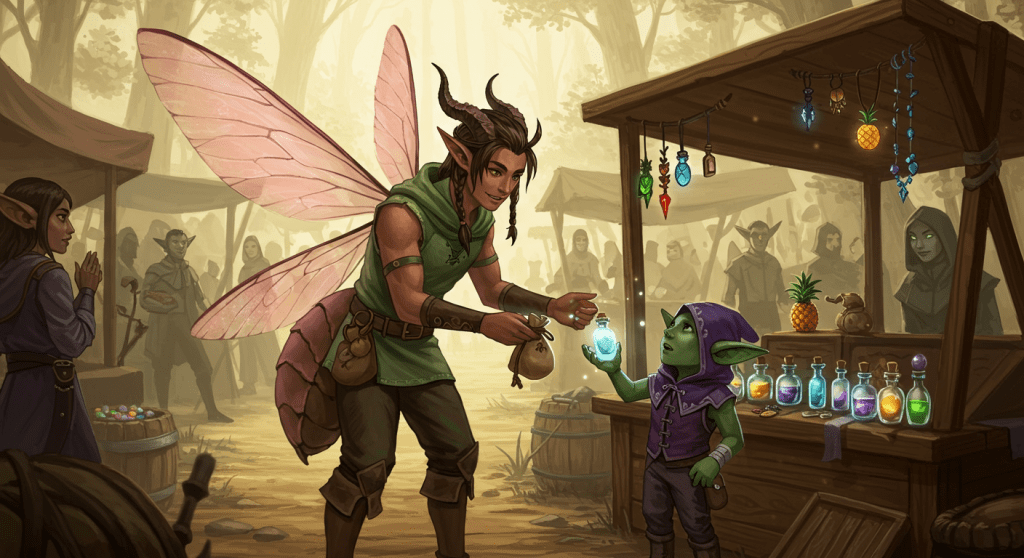
Related to their belief that beauty equals goodness, most fey do not understand monetary value as mortals do, where scarcity determines worth. To the fey, the value of a thing is its beauty, the way it makes the owner feel, and its functional value as a tool or magical power. To your average pixie or goblin, there is no difference between a glass diamond and a real one; they shine and glimmer just the same. The only known exceptions to this rule are eladrin, hags, and archfey, although it is not a universal exception in the last case. While these exceptions exist, they are often functionally irrelevant. Even though most powerful fey can understand monetary value, they typically prefer tribute in the form of beautiful objects and potent emotions.
Typically, the fey resort to barter when they trade or make contracts, and haggling is an art form among them. It is not uncommon for a fey trader to rummage through the possessions of a potential customer until the two agree on an item among the customer’s possessions that the seller wants and the purchaser is willing to part with. Other times, the price of a merchant’s wares will be a favor or a service done for the seller. However, the most prevalent form of traded goods among the fey are intangibles such as cherished memories, happy thoughts, good dreams, syllables from one name, and flights of fancy. Most markets in the feywild are full of merchants that trade in dreams and memories.
Conversely, unscrupulous mortals can easily exploit this unique understanding of value, contributing to the misconception that fairies are hopelessly naive and that goblins are unintelligent. Tales about how mortals trick fey into selling them expensive things for a pittance of a few coppers, a brass ring with glass stones, or a posy of flowers are endless. Even when the price of a service or object is a memory, there are tales about how cunning mortals trick the fey into believing a common or unpleasant memory is valuable.
When roleplaying, the feyfolk do not accept payment in the form of the item or service’s monastery value:
- Force the players to haggle with you and insist on letting the character rummage through their bag or their memories to find a suitable price.
- The fey assigns value based on beauty and sentimental value, so determine the emotional value of the item sold by how much it has to the fey before you start haggling.
- When haggling, remember that fey characters will naturally gravitate towards shiny, sparkling things or things that have some form of sentimental value to the players regardless of their actual value.
- Let the players make deception checks against the character’s wisdom score if they want to trick a fey into accepting a lesser price for a good or service.
- If you and the character cannot agree on a price, then have the players offer you a favor or contract as the price.
The feyfolk value Intuition over logic.
In the Feywild, emotions shape the land, and the land itself is ever-changing. As a result, feyfolk have little use for logic. They overwhelmingly rely on intuition over logic when making decisions. When asked to explain why they made a particular decision, a member of the fey folk will often reply, “It seemed to be the right thing to do,” “I followed my heart,” or ” Because it made me happy.”
Many common fey struggle to grasp mortal logic. Even when logical deduction is explained to them, goblins, satyrs, and fairy-folk struggle to understand and frequently dismiss both the process and conclusion, this dismissal of rational thought also extends to logic-adjacent topics; most fey, even intelligent ones, struggle to understand mathematics beyond basic arithmetic; time is an entirely foreign concept to them, as is the notion there are fixed directions to a location. When a fey does try to use logic, it will usually descend into nonsensical dream logic very quickly. Archfey and hags are known to be exceptions to this rule, and most can use and often misuse logic quite well. However, such beings generally prefer to go with their gut when making decisions.
Combined with several other things we discussed, the problems this can cause when mortals interact with the fey are quickly evident. A pixie might give directions that are entirely useless to a mortal folk. A goblin might explain to a lumberjack why he is overly protective of a tree using dream logic.
When roleplaying the fey, go with your gut as to how they should act. If a player character tries to explain something to you rationally, acts confused about the details, or dismisses it out of hand for some arbitrary reason.
The fey folk cannot tell blatant lies.
The feyfolk have a well-earned reputation for being tricky and manipulative. However, some unknown force of the Feywild prevents most feyfolk from knowingly telling outright lies. A lesser fey can exaggerate the truth, but they cannot say something like the sky is red, snow is hot, or anything blatantly untrue. If a goblin or pixie is asked a question and told they can only answer with either yes or no and only yes or no, they will tell you the truth.
However, that does not mean that feyfolk cannot tell lies. Instead, they use illusions, misdirection, and half-truths to create false impressions. A fey might omit key details, use convoluted dream logic, or bury the truth under a flood of confusing words. The result? The listener is either baffled or completely misled—without the fey ever telling a direct lie

However, for any mortal in the know, the fact that the fey has to resort to such tactics makes it reasonably easy to detect when a lesser fey is lying and, more importantly, prevent a lesser fey from lying. If a fey creature does not give answers using definite language, uses several dozen complex words when a simple yes or no will suffice, or seems otherwise evasive, it is usually a good indication that they are lying. Those who interact with the fey know that insisting that questions be answered with yes or no or having them point to a location on a map are also ways to ensure they do not lie.
Interestingly, the hags and archfey are not bound by this inability to lie in any way, shape, or form.
When role-playing deceptive fey, use any of the tricks described above when you need to lie, especially when the results seem comedic:
- If a player forces a fey to answer in definite terms, play up their frustration. They may sigh dramatically before giving a reluctant ‘yes’—only for it to mean something entirely unexpected.
- Alternatively, they may try to redefine the question, answer in an outdated dialect, or respond with an unhelpful riddle
- . If they catch you in a lie, play the encounter by ear, always opting for the option that makes the situation more convoluted and comedic.
Feyfolk society revolves around the numbers 3 and 8
In the feywild, things naturally tend to happen in threes and eights. There are three major courts of the fey. The minimum (and often maximum) number of hags in a coven is three. There are three major species of goblinoids, the trio of past, present, and future; Titania is known to have three children and two sisters. Trials in stories often come in threes, and narratives tend to have three acts. There are eight main phases of the moon, eight schools of magic, eight cardinal directions, and eight festivals of the wheel of the year. Nobody is sure why the feywild continuously manifests things in groups of 8 and three, although countless theories exist among the fey and mortal scholars. However, the fey have noticed this and integrated the numbers three and eight into their cultures. To most feyfolk, the number eight symbolizes eternity, the passage of time, and cycles—much like an ouroboros. Meanwhile, three represents harmony, balance, and the natural rhythm of existence.
Due to the symbolism, feyfolk society tends to include themes of 3 and 8 in almost every aspect of their culture. While the individual ways both numbers manifest in fey society are countless, a few examples are when a fey creature asks for payment for a major service done, they will often ask for three things or three favors, traditional pixie circle dances are generally done in multiple of three or 8, with 24 being an especially popular option, when a fey needs to ensure that someone they mean to follow their promise, they will swear by eight powerful archfeys.
When roleplaying a fey, look for natural ways to incorporate threes and eights.. Some possibilities include:
- Repeat things three times for emphasis
- Request three favors as payment,
- gather in groups of three
- Make eightfold oaths to insist they are telling the truth
The Feyfolk Will Never Willingly Renege on a Contract or Promise.
Every species of feyfolk, from the kindest goblin to the most devious hag or the most powerful archfey, would sooner perish than break a promise or an oath. They always fulfill their promises to the letter, whenever possible without exception. There is a widespread belief so ancient that nobody knows how or why it began among the fey folk that promises, oaths, and contracts have an innate power, a kind of unique and powerful magic all of their own. When you make a promise, it binds the souls of each party in the promise or contract at a fundamental level. If one side breaks their oath or contract, that connection ensures that the renegers will swiftly come to bad ends. Curses, misfortune, transformations, and death are all cited in fey folklore as the price for breaking a contract. Whether this is true remains a topic of debate among scholars, though fey contracts often include clauses detailing the terrible fates awaiting those who break them.
What is undeniable is that the feyfolk will go to extreme lengths to avoid breaking a promise or oath When a fey makes a promise or oath to do something, they usually choose their words very carefully so as not to render themselves unable to fulfill the terms of the promise or unintentionally give something precious away. It is also considered bad manners among the fey, or at least the ones considered good or lawful, to use loopholes or technicalities to wriggle your way out of a deal or promise. However, this is relatively common with hags and other evil-aligned fey.
If the unthinkable happens and they break the contract intentionally or unintentionally, there is believed to be only one way to save yourself from the dire karmic fate: throw yourself on the mercy of the injured party or parties. Depending on the scale of the promise, this can go one of a few ways, if the promise was a simple promise among friends, a simple and heartfelt gift (see the section on fey views on the value of objects for an idea what such a gift entails) is usually all that is required to smooth things over. However, oaths and contracts are different beasts entirely. It is common for the injured party to force a contract breaker or oathbreaker to take on a new, usually much more demanding oath or contract. The oathbreaker will have no choice but to accept whatever terms the injured parties may create. This contract will often be indentured servitude until a specific condition is met.
Regardless of the scale of the promise broken or contract reneged on, those who break their oaths and promises are seen as pariahs in fey society, especially if they do not seek to make amends. Oathbreakers are generally shunned in polite society and forced to the edges. Many communities will physically mark those who break important promises and contracts with brands or tattoos to warn others not to trust them. The community will drive the oathbreaker out of town on rare instances of blatant or repeated oathbreaking.
Keep all this in mind when roleplaying fey creatures. Fey creatures expect others to follow agreements to the letter—without loopholes or deception.
- If players try to undercut a deal, fey should react with anger and exasperation.
- If the players do break or try to undercut the deal roleplay the other party as being outraged and have them demand that the players make amends.
- When making deals, the fey obsess over precise wording. They may nitpick phrasing, insist on perfect clarity, or even test the player’s sincerity before sealing the contract.
- If a fey creature breaks a promise to a player character, depict them as panicking, have them beg the player for forgiveness, and describe them as being willing to abide by the terms of any oath or promise the player forces upon them.
The feyfolk are obsessed with Reciprocity.
Reciprocity is woven into the fabric of the Feywild itself—it naturally seeks balance in all things: light and dark, joy and sorrow. Likewise, the feyfolk seek balance in all social interactions. The society of the fey operates on a complex system of quid pro quo. To the fey, any action, service, or gift must be balanced by something of equal value to maintain balance and harmony in the universe, immediately or at some time in the future. However, among the fey, what constitutes ‘equal value’ is entirely subjective. When it comes to gifts, intent matters greatly. A gift given begrudgingly—or one that the giver does not truly value—is worth far less than a gift with sentimental significance or one given with sincere gratitude
The fey feelings about reciprocity often clash with the values of the mortals they interact with. Without asking the object’s owner, a fey might take an item and leave something of supposedly equal value in its place. Trouble arises, however, when mortals accept gifts from the fey. Most mortals are unaware of the implied promise that a gift received demands a gift in return at a later date; as such, these mortals will find themselves burdened with a debt that could be anything “from give me some pretty jewels, any kind, real or glass is fine,” to, “I want Your everlasting fealty. The consequences for denying such a request is usually dire as per fey beliefs about oath breaking, especially if the gift giver was an archfey or hag.
When roleplaying fey, have them insist on repaying any service or gift given to them
- When a feyfolk gives a gift or service to the players, have them insist on playing them back later.
- If players fail to return the favor, they may suffer a fey curse or find themselves shunned by the feyfolk. The ‘Fey Curses’ section of Domains of Delight (Wizards of the Coast) provides a great starting point for such curses.
- Alternatively, future dealings with the fey could be hindered, as word of the players’ broken promise spreads


Leave a Reply