

Happy Imbolc, wayfarers! If you thought Groundhog Day was purely an American holiday or a recently contrived celebration, think again. Imbolc, also known as Oimelc, Lady Day, and, to Christians, Candlemas or St. Brigid’s Day, dates back to at least pre-Christian times in Britian. Like Groundhog Day, it is a celebration of the first stirrings of spring.
Imbolc is one of the least practiced holidays of the Feengrenze calendar(by the way did you know I created an official calendar for the Feengrenze?). Unlike the grand and public festivals of Yule, Beltaine, and Samhain, Imbolc celebrations tend to be more somber, intimate, and centered around the home and hearth. In fact, it is the least observed festival of the Wheel of the Year, with its observance largely confined to the few remaining centers of Old Fey Paganism.
Old Fey Origins
Old Fey Paganism revolves around the worship of the Lord and the Lady, a pair of deities representing untamed magic, transformation, and passion, as well as stability, nurture, and wisdom, respectively. The festival of Imbolc is typically held on the first and second day of Snowfall (Titim Sneachta). It is one of three festivals (the others being Yule and Beltaine) dedicated to the Lady, specifically honoring her aspects as the Mother.
In some interpretations of Old Fey Paganism, the Lord dies at Samhain, the Lady becomes pregnant with him on Yule, and he is born again at Imbolc. Additionally, Imbolc coincides with the time when many farm animals, particularly sheep, begin to give birth to the year’s young. As such, practitioners of Old Fey Paganism view Imbolc as a fertility festival, specifically one that ensures a fruitful harvest. The holiday is also associated with new beginnings of all kinds, making it a time to seek blessings for seeds and set projects in motion.
Contemporary Practices
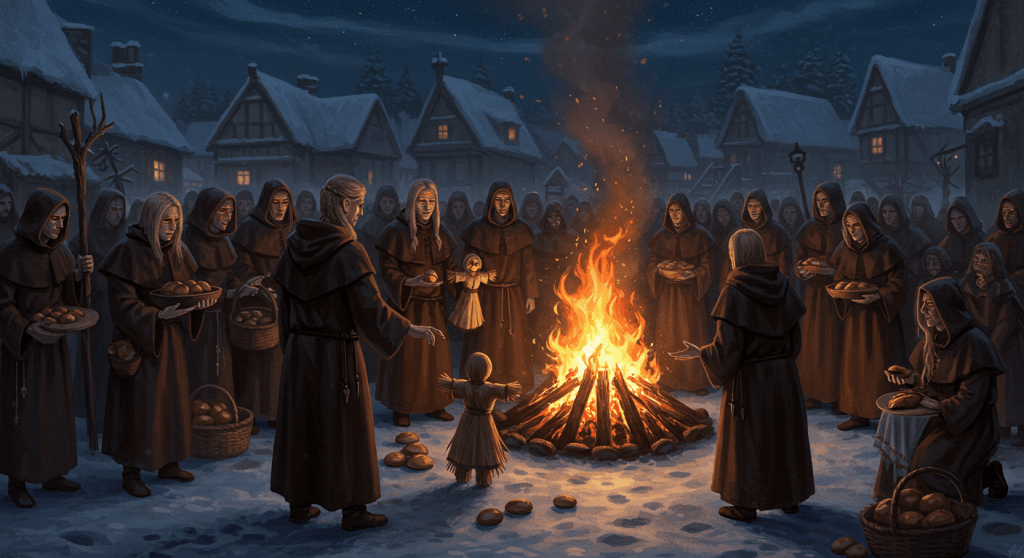
Fire has long been associated with the festival. In communities with a strong Old Fey Pagan presence, a bonfire ritual is typically performed at the height of the festival. Offerings of oatcakes and straw effigies of the Lady are burned in the fire in hopes of securing a bountiful harvest. Elsewhere, practitioners perform smaller-scale rituals centered around the hearth of the home, burning similar offerings for the same purpose.
Imbolc is generally regarded as a time to make or reaffirm vows and oaths. In Old Fey Pagan communities, it is customary during the bonfire ritual to swear oaths, particularly agreements of trade, marriage, or apprenticeship, before the community as the offering is placed into the fire. Imbolc is also a significant time for the initiation of new druids. The Coven of the Silver Moon, for example, holds entrance ceremonies for new apprentices and lay sisters during the festival.


Leave a Reply