

In many ways, the goblinoids are the humans and halflings of the fey realm. They are the least fantastical of all the races that call the realm home, have the greatest range of alignments, and are the most likely to make or join communities. Goblinoids originated in the feyrealm in the ancient past, where they formed the bulk of the citizenry of the ancient fey courts. They lived peacefully, often in a fashion that would be recognizable to the average peasant. They only got their reputation as evil creatures when they came to the mortal realm as part of the army of the first and only so far High King of the fey, Faolan the Mad.
The mad High King and the goblinoids of the material world
In hindsight, the prince named Faolan should have been an artist and poet instead of a king. His silver tongue managed to win him the High King’s throne despite lacking in other kingly qualities like military strategy, economic policy, or foreign policy. He was so enamored with beauty that when he saw the other worlds created by the Worldshaper and wreaked by the Ruinbringer, he could not help himself, he needed to fix them. He amassed an army and invaded the rest of creation. The process of trying to shape the solid mortal world to his vision proved fruitless and drove him mad in the end. He started to blame the ruinbringer for his failures and decided one day to invade the pits of ruin.
To call the battle of the crack of ruin a battle is a disservice to the word. From the very moment that Faolan army entered the pits of ruin, the demon servants of the ruinbringer swarmed them. In mere moments, the battle turned into a massacre. In a desperate bid to save his own life, Faolan surrendered to the ruinbringer unconditionally. The ruinbringer then dictated his terms, the fey would pay a tithe to him every 7 years of 7 lads and 7 lasses. Faolan agreed, knowing the fey would be forced to stay true to his terms. Faolan would return to the feyrealm only to be stripped of his title and thrown into a prison in the heart of the feyrealm. To this day he raves at the walls of his padded cell. The 4 high courts of the fey then decided to wash their hands of the mortal realms and the High King’s army. They closed most of the portal between the mortal realms and the Feyrealm stranding most of the High King’s army in the mortal realms.
It only took months for the High Kings’ army to lose their powers and their near immortality. They found themselves feared by mortals, This newfound vulnerability sowed seeds of fear among them. Feared by the mortals, they were shunned by the peoples of the mortal world and driven into the wilds. Sensing the desperation and fear among the goblinoids, the Ruinbringer, saw an opportunity. He sent demons to spread doubt, fear, and hate among them. The demons stoked the hate of their fates, of the fey, and of the mortals that shunned them in their hour of need. It only took two generations for the once-civilized goblinoids to succumb to the Ruinbringer’s influence. They embraced evil and savagery in a bid to take revenge on the world. All goblinoids found in the mortal realms are the descendants of the High King’s army.
Feyrealm goblins
The three races collectively called goblinoids have no actual relation to each other, and this is simply a moniker given to them by the mortal races based on their common behavior. However, it should be noted that the behavior of mortal realm goblins is in no way related to their feyrealm counterparts. Goblinoids of the fey are usually quite civilized and can have any alignment imaginable. Indeed, adventuring goblin and hobgoblin heroes are quite common in the feyrealm. Now let’s take a closer look at the various goblinoid races in detail.
The Celtiru

Among all the fey, the Celtiru or goblins were the first to create settlements. Their small size meant that they had to band together to survive and the larger the community the better chance they had. They were the first fey to figure out farming and are still primarily an agrarian people. They are the most widespread of all fey races, being found in all fey domains and settlements outside the domains. This has also caused them to have no real cultural identity as a people.
Their small stature and resourcefulness make them adept at integration, and Celtiru goblins can be found working in fey cities, laboring in farms, or living in serene hamlets in the calm corners of the Feyrealm. Amidst their diaspora, one fact is evident above all in Celtiru society, tribe, and community. Small, tight-knit groups form the backbone of their social structure, offering safety, camaraderie, and shared purpose. Whether dwelling in fey court cities, working the fields, or residing in remote hunter-gatherer communities, Celtiru goblins find strength in unity.
The Celtiru, like most fey, have some form of magic powers. The most common among the Celtiru are misty steps, minor image, and a limited form of telekinesis.
Celtiru communities
Of all the fey races, Celtiru settlements are the most varied. They can be found in all corners of the feyrealm. The settlements seamlessly integrate with the surrounding Feyrealm environment. Homes are often built into the landscape, utilizing the natural features of the terrain. Treehouses, burrows, and moss-covered dwellings are the norm. The heart of the settlement, a communal area, serves as a gathering place for celebrations, meetings, and shared activities. Festive decorations, colorful fabrics, and bioluminescent plants contribute to the vibrant atmosphere. The Celtiru prefer the use of spirals and knot work in their artwork and decorations, reminiscent of Celtic knots. They are even known to lay out their settlements in these patterns
The Celtiu are an agrarian people. Typically, their settlements are surrounded by cropland, animal pens, or if the option is available fish farms. Fields and pastures tend to be communally owned, with all residents of the community working the land for substance. The Celtiru also tend to quickly loan and borrow tools, a trait that can lead to some problems when Celtiru move into settlements of other races.
Leadership is typically shared among a council of elders, wise goblins who have garnered respect through their experiences. The council’s primary job is to see to the running of the day-to-day and to resolve small disputes between individuals. Major decisions and criminal justice tend to be collaborative, with community meetings and impromptu elections common.
The Ailfyr
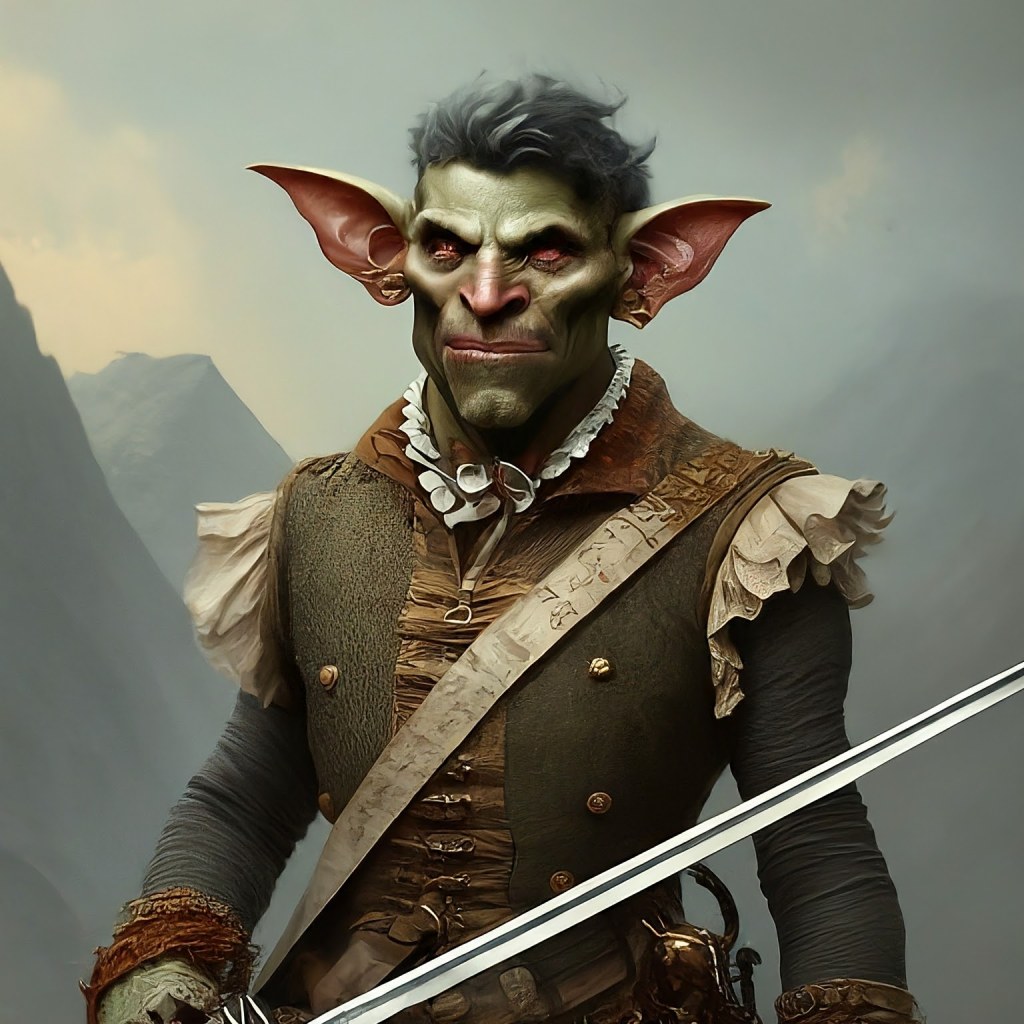
In the Feyrealm, the Ailfyr as the hobgoblins call themselves stand as exemplars of unwavering loyalty and dedication. From the moment they can walk, the Ailfyr are deeply ingrained with the concepts of vassalage and service. It is often considered this fact that caused them to become the backbone of the High King’s army, loyalty like that makes for perfect soldiers. In the wake of the High King’s defeat, those who stayed in the feyrealm have continued their existence as devoted servants, their lives defined by service to lords, ladies, and generals.
Ailfyr can be found in most fey domains, where they serve in diverse capacities. As soldiers, they defend their lords’ realms; as administrators, they ensure the smooth functioning of domains; as scholars and mages, they delve into the mysteries of the Feyrealm; and as master artisans, they craft works of unparalleled beauty.
Ailfyr hobgoblins take immense pride in their work, whether it be in the forging of weapons, the administration of realms, the pursuit of knowledge, or the creation of intricate art. They view worthwhile and skillful work as a testament to their loyalty and dedication. Ailfyr are driven by an innate desire for recognition, Ailfyr hobgoblins seek praise and acclaim from both their fellows and their sworn masters. This pursuit of approval becomes a powerful motivator, propelling them to achieve greater heights in their chosen occupations.
The pursuit of their craft also causes the Ailfyr to develop a magical sixth sense. Ailfyr can innately tell when something related to their craft is wrong. An Ailfyr craftsman can detect the smallest imperfections in a piece, a swordsman can sense an attacker approaching from behind and an Ailfyr hunter can even detect an arrow being aimed at his head
The concept of loyalty is the cornerstone of Ailfyr existence. Ailfyr with no lord or master actively seek out lords or ladies whom they deem worthy of their service. The process is deliberate, and they commit themselves faithfully to those they believe embody the virtues and principles befitting of their loyalty. Rarely does an Ailfyr leave their master’s service willingly. Such a decision typically stems from a deemed lack of respect or a crossing of a personal moral boundary. Loyalty is both their strength and their code of honor.
Ailfyr Settlements
While the concept of an independent Ailfyr community is unheard of, scattered small settlements and Ailfyr enclaves within larger fey domains showcase the unique blend of craftsmanship and service that defines their culture. Ailfyr settlements are characterized by well-constructed wood buildings, primarily single-story longhouses. These structures serve a dual purpose as both residences and workspaces for the Ailfyr residents. Crafted with precision and care, these longhouses stand as testaments to the hobgoblins’ commitment to their craft. The facades of Ailfyr dwellings are adorned with intricately carved panels, featuring designs reminiscent of medieval Irish art. These carvings tell stories of loyalty, service, and the Ailfyr’s connection to the Feyrealm. The artistic expressions in their homes embody the values that guide their lives. Within these longhouses, every residence doubles as a functional workspace. Ailfyr hobgoblins seamlessly integrate their work into their living spaces, blurring the lines between personal and professional life. This approach emphasizes the importance of craftsmanship in their culture.
While Ailfyr settlements exist independently, they can also be found as enclaves within larger fey domains. Ailfyr settlements adhere to a feudalistic governance structure, mirroring the hierarchical systems of service they are accustomed to. Hobgoblins follow the orders of a liege lord and their representatives, ensuring a structured and organized community life
Bealcú
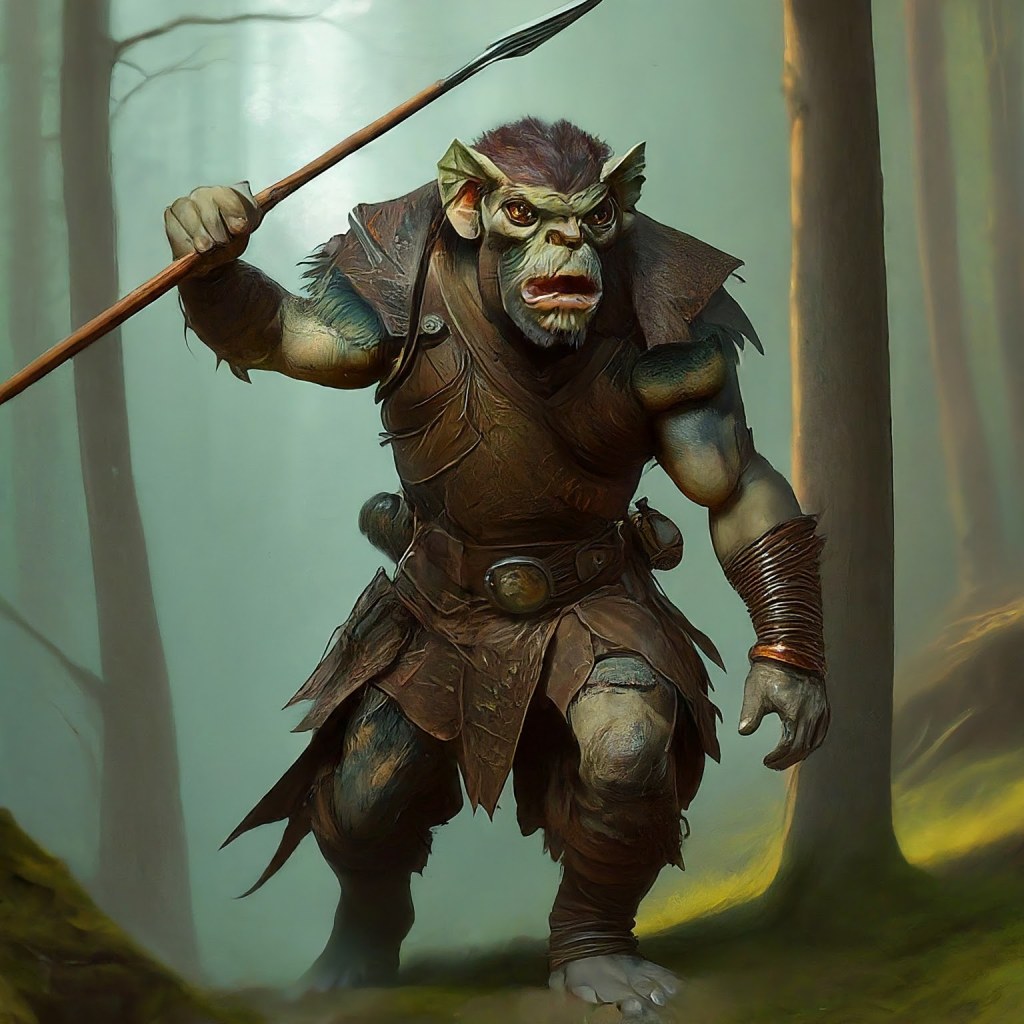
In the heart of the Feyrealm’s untamed landscapes, the Bealcú as the bugbears call themselves, thrive as nomadic spirits, living in harmony with the enchanted forests that define their existence. Hunting and gathering form the core of Bealcú sustenance. The bugbears navigate the dense Feyrealm forests, relying on their strength, agility, and knowledge of the land to procure sustenance from the bountiful flora and fauna that grace their mystical home. Bealcú shares an intimate connection with the Feyrealm forests, drawing inspiration from the magical energies that course through the ancient trees.
Bugbears may retain the Bealcú fondness for ambushes, but the Bealcú have perfected it. The Bealcú have the innate ability to mask their presence using magic. While standing still, a Bealcú hunter is almost impossible to see. They often use this ability to avoid interacting with members of other races. The Bealcú are insular people who rarely see the benefit of interacting with other people, especially civilized folk who tend to make them feel stupid. They may occasionally trade with non-Bealcú, but this is exceedingly rare. However, the Bealcú are known to be quite open about interacting with others of their race beyond their bands. It is common for bands to get together a few times a year at common meeting places deep within the forests of the feyrealm usually on the solstices and the equinoxes. Such gathering a marked by games, barter, story swapping, and often courting.
While the Bealcú predominantly keeps to the Feyrealm forests, rare individuals are overcome with wanderlust. Driven by an innate desire for exploration, these bugbears venture into fey domains, where their strength finds purpose in various occupations that benefit their capabilities.
Some Example Stat Blocks
As closing word I have created some stat blocks for each race in case my fellow dungeon masters need them for a fight. They demonstrate the fey nature of the three Goblinoid races quite wll in my opinion.
Ailfyr Feyknight
Medium Fey, Neutral
Armor Class 18 (Chain Mail, Shield)
Hit Points 45 (7d8 + 14)
Speed 30 ft.
STR 16 (+3)
DEX 12 (+1)
CON 14 (+2)
INT 10 (+0)
WIS 12 (+1)
CHA 10 (+0)
Skills Athletics +5, Perception +3
Senses Darkvision 60 ft., Passive Perception 13
Languages Common, Goblin
Challenge 2 (450 XP)
Fey Ancestry. The Ailfyr has advantage on saving throws against being charmed, and magic can’t put it to sleep.
Sixth Sense. The feyknight is instinctively aware of foes attempting to attack it from behind, making it immune to sneak attacks.
Actions
Longsword. Melee Weapon Attack: +5 to hit, reach 5 ft., one target.
Hit: 8 (1d8 + 3) slashing damage.
Longbow. Ranged Weapon Attack: +3 to hit, range 150/600 ft., one target.
Hit: 6 (1d8 + 1) piercing damage.
Multiattack. The feyknight makes two attacks, either with its longsword or its longbow.
Reactions
Defensive Instinct. When the feyknight is hit by an attack, it can use its reaction to gain a +2 bonus to its AC against that attack, potentially turning the blow aside.
Commanding Presence. As a reaction, when an ally that can see or hear the feyknight makes an attack roll or a saving throw, the feyknight can grant a +2 bonus to the roll.
Ailfyr
Mage
Medium Fey, Neutral
Armor Class 12 (Mage Armor)
Hit Points 27 (6d8)
Speed 30 ft.
STR 10 (+0)
DEX 12 (+1)
CON 10 (+0)
INT 16 (+3)
WIS 12 (+1)
CHA 8 (-1)
Skills Arcana +5, Perception +3
Senses Darkvision 60 ft., Passive Perception 13
Languages Common, Goblin
Challenge 2 (450 XP)
Fey Ancestry. The Ailfyr has advantage on saving throws against being charmed, and magic can’t put it to sleep.
Sixth Sense (Wizardry). The Ailfyr mage is attuned to the arcane and has a heightened awareness related to magic. It gains advantage on saving throws against spells and effects that target it directly.
Spellcasting
The Ailfyr mage is a 4th-level spellcaster. Its spellcasting ability is Intelligence (spell save DC 13, +5 to hit with spell attacks). The hobgoblin mage has the following wizard spells prepared:
- Cantrips (at will): mage hand, prestidigitation, ray of frost
- 1st level (4 slots): magic missile, shield, mage armor
- 2nd level (3 slots): misty step, scorching ray
Actions
Dagger. Melee or Ranged Weapon Attack: +2 to hit, reach 5 ft. or range 20/60 ft., one target.
Hit: 2 (1d4) piercing damage.
Staff. Melee Weapon Attack: +2 to hit, reach 5 ft., one target.
Hit: 2 (1d4) bludgeoning damage.
Cantrip Attack. The hobgoblin mage can use a cantrip as a bonus action after casting a spell.
Bealcú Scout
Medium Fey, Neutral
Armor Class 13 (Hide Armor)
Hit Points 33 (6d8 + 6)
Speed 30 ft.
STR 16 (+3)
DEX 14 (+2)
CON 12 (+1)
INT 8 (-1)
WIS 10 (+0)
CHA 8 (-1)
Skills Stealth +6, Survival +2
Senses Darkvision 60 ft., Passive Perception 10
Languages Common, Goblin
Challenge 1 (200 XP)
Fey Ancestry. The bugbear has advantage on saving throws against being charmed, and magic can’t put it to sleep.
Fade into the Shadows. The bugbear can use its action to magically become invisible until the start of its next turn. Once it uses this ability, it can’t use it again until it finishes a short or long rest.
Actions
Morningstar. Melee Weapon Attack: +5 to hit, reach 5 ft., one target.
Hit: 11 (2d8 + 3) piercing damage.
Javelin. Melee or Ranged Weapon Attack: +5 to hit, reach 5 ft. or range 30/120 ft., one target.
Hit: 9 (2d6 + 3) piercing damage.
Ambush Strike. If the bugbear surprises a creature and hits it with an attack during the first round of combat, the target takes an extra 7 (2d6) damage from the attack.
Fade Tactics. Once per turn, when the bugbear takes damage from a creature it can see, it can use its reaction to magically become invisible until the start of its next turn or until it attacks or casts a spell.
Celtiru Militiaman
Small Fey, Neutral
Armor Class 11 (Leather Armor)
Hit Points 16 (3d6 + 6)
Speed 30 ft.
STR 8 (-1)
DEX 14 (+2)
CON 14 (+2)
INT 10 (+0)
WIS 10 (+0)
CHA 8 (-1)
Skills Stealth +6
Senses Darkvision 60 ft., Passive Perception 10
Languages Common, Goblin
Challenge 1/2 (100 XP)
Fey Ancestry. The Celtiru has advantage on saving throws against being charmed, and magic can’t put it to sleep.
Innate Magic. The Celtiru can cast minor illusion and mage hand at will, using Dexterity as its spellcasting ability (spell save DC 12).
Nimble Escape. The Celtiru can take the Disengage or Hide action as a bonus action on each of its turns.
Actions
Shortsword. Melee Weapon Attack: +3 to hit, reach 5 ft., one target.
Hit: 5 (1d6 + 2) piercing damage.
Shortbow. Ranged Weapon Attack: +3 to hit, range 80/320 ft., one target.
Hit: 4 (1d6 + 2) piercing damage.
Reactions
Evasive Maneuver. When the Celtiru is targeted by an attack, it can use its reaction to magically teleport up to 30 feet to an unoccupied space it can see, avoiding the attack.
 The feengrenze historia