

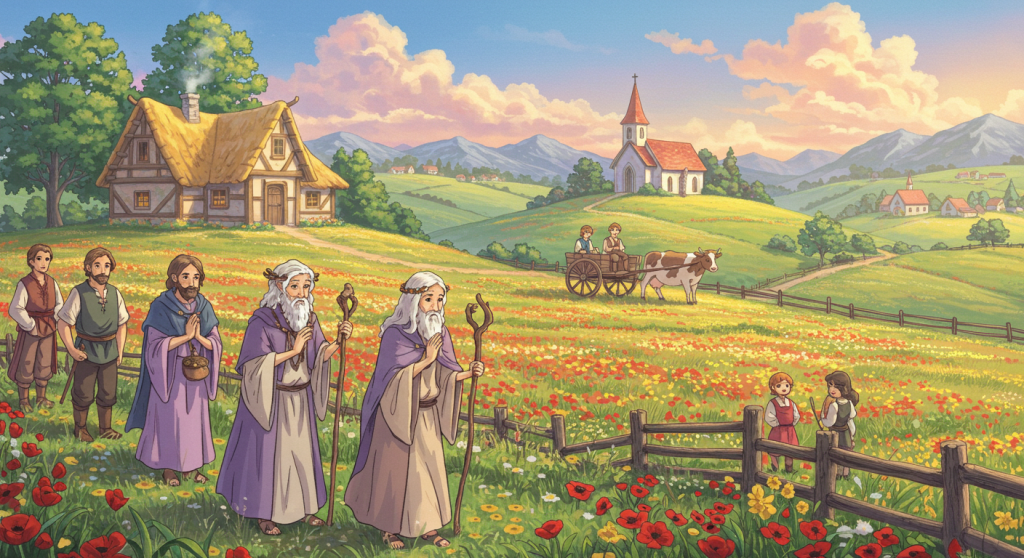
Happy Ostara, everybody. Ostara is the second major festival of the wheel of the year in the Feengrenze. Occurring from the 19th to the 23rd of Thawmoon, it celebrates the true arrival of spring. It is also the first of the eight major festivals of the year that sees widespread celebration throughout the feengrenze.
Old Fey Origins
In the most common interpretation of the Old Fey Paganism, Ostara is when the lady returns to her maiden aspect, and the lord has grown to his early teens. Ostra is the time for growth and the return of warmth and life after winter.
Contemporary practices
Contemporary Ostara celebrations in the feengrenze have many parallels to easter celebrations. Eggs, rabbits, and blooming flowers are the central symbols of the holiday. Decorating eggs is a common practice and is used as decoration for shrines and alters to the lord and lady. Flowers and effigies of rabbits are also common decorations. Feasting is also a common occurrence for the holiday, with fresh greens, eggs, and dairy being the centerpieces of the feasts
Ostara is also generally the time when the druids of Old Fey Paganism bless fields and seeds. The rituals differ from community to community but generally involve the druids either ceremonially plowing fields while chanting and spreading offerings of the first blooming flowers of spring over the field or blessing seeds before images of the lord and the lady in their youthful form.
The Ostara Rituals of the Silver Moon Coven
The Silver Moon Coven’s Ostara celebration is among the most elaborate and significant versions of the festival in the Feengrenze. Held at their commune in Silvermoon Glade, the festival marks the first major ritual for newly inducted apprentices following their initiation at Imbolc. Ostara serves as a rite of passage, symbolizing renewal, growth, and the boundless potential of spring. The Lady, now in her Maiden aspect, embodies these themes, making her presence especially meaningful for the apprentices as they embark on their magical journeys.
At dawn, the entire coven, dressed in flowing white robes, gathers within the henge at the heart of the glade for the opening rite. The newly inducted apprentices, adorned in the likeness of the Maiden, are led to the henge by a senior apprentice. Upon their arrival, the High Matrons, led by Agatha Ironraisin, bestow their blessings upon the novices, welcoming them fully into the coven’s fold.
Following this sacred rite, a grand procession winds through the commune’s farm fields and pastures, ensuring a prosperous season ahead. Agatha leads the way, with the newly inducted apprentices following close behind, scattering flower petals and other offerings upon the land. The rest of the coven trails behind, chanting prayers to the Lady, beseeching her favor for the coming year’s harvest.
Once the morning rituals conclude, the celebration transforms into a vibrant festival, drawing not only the coven but the entire community of Silvermoon Glade. Many visitors jokingly refer to Ostara as the coven’s “Beltane in disguise,” but the comparison is not without merit. By midday, the festivities resemble a lively May Day fair—filled with music, dancing, games, and friendly competitions. The youngest of the Eight High Matrons, the mischievous pixie Poppy Thistledown, leads the younger members in various revelries. Vendors line the pathways, selling enchanted trinkets, floral wreaths, and sweet honey cakes while the air hums with flutes and laughter.
This joyous atmosphere is not merely for entertainment—it serves a deeper purpose. The festival is carefully crafted to integrate the newest members into the community, ensuring they feel truly at home within the coven. As the sun sets, the revelry gives way to quieter reflections as apprentices and seasoned witches gather around small hearths to share stories, dreams, and aspirations for the year ahead.


Leave a Reply